
Consumers are well aware of the benefits of choosing solid‑wood doors for interior decoration—provided, of course, that they select a high‑quality option. So how can we, as consumers, tell whether a solid‑wood door is good or not? Are there any simple methods?
1. Price
You get what you pay for—this is a timeless truth. When the manufacturer is located far away, transportation costs must also be factored in. That’s why it’s quite common in the door industry for quotes to vary from one region to another; this is perfectly normal. In short, the price of a solid‑wood door is made up of the manufacturer’s production costs, shipping expenses, and the distributor’s profit margin. Add these three components together, and you’ll typically find that solid‑wood doors cost well over a thousand yuan. When consumers come across unusually low‑priced solid‑wood doors, they should think carefully. After all, the reason high‑quality solid‑wood doors command higher prices isn’t just their superior craftsmanship—it also includes value‑added services like after‑sales support and installation.
2. Weight
Solid wood doors, being crafted from a single type of timber, tend to be relatively heavy. However, weight alone is not a reliable criterion; it must be evaluated in conjunction with other factors. For instance, some solid‑wood doors made from engineered panels can weigh more than traditional solid wood doors, yet this does not necessarily mean they are superior. In particular, solid‑wood composite doors offer the advantages of lighter weight and well‑balanced performance across multiple dimensions.
3. Texture
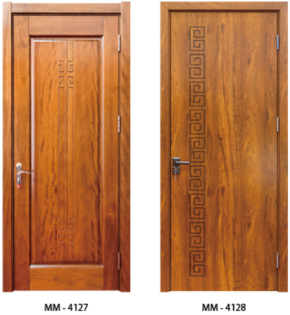
Solid wood doors are crafted from natural timber, so their surfaces feature natural, smooth wood grain. *** Meanwhile, low-quality solid-wood doors typically have paper veneers on the surface, with stiff, unnatural, and repetitive wood grain patterns.
4. Knock
Solid wood doors, particularly those made from natural timber, are crafted entirely from wood and feature a solid interior. Therefore, if a consumer detects inconsistent tones when tapping different areas of a solid wood door, it indicates that the door is not a genuine solid wood door.
5. Anti-counterfeiting mark
To safeguard consumers’ interests and uphold their brand image, reputable solid-wood door manufacturers typically offer anti-counterfeiting verification services. Conducting a verification using the manufacturer’s designated anti-counterfeiting method is a reliable option.