
Over the course of long centuries, solid wood was the sole choice for wooden furniture. In the West, from ancient Greece and Rome through the Byzantine era, and from the Renaissance to the Baroque, Rococo, and Neoclassical styles, and in China, from the Shang and Zhou dynasties down to the Ming and Qing periods, the work of furniture designers in every age can be summed up as a continuous process of refining and innovating solid‑wood furniture. This was partly due to the technological limitations of earlier times, but it also reflected the abundant forest resources available then.
The pinnacle of solid‑wood furniture is Ming‑style furniture, which embodies the quintessence of traditional Chinese craftsmanship. Departing from earlier practices that relied on plain woods or softwoods and concealed their natural grain beneath colorful lacquer, Ming‑style pieces employ precious tropical hardwoods such as zitan, huanghuali, ebony, jiachi, and suanzhi. They emphasize clean lines, intricate carving, and exquisite inlay work. With their distinguished materials, elegant grain patterns, perfectly simple forms, rigorously sound construction, and a refined, graceful aesthetic, they not only represent the zenith of traditional Chinese furniture but also occupy an irreplaceable and pivotal place in the history of global furniture.
The European Industrial Revolution, which began in the late eighteenth century, heralded the dawn of modern furniture. The depletion of forest resources and the growing awareness of environmental concerns gave rise to engineered wood panels. 1836 Year, the Belgian furniture maker Tonniet ( Thonet ) He invented laminated panel technology and bent‑wood techniques, and was the first to employ assembly‑line production for mass‑producing furniture. This marked the dawn of modern panel furniture and mechanized manufacturing. Subsequently, panel furniture grew rapidly, swiftly supplanting traditional solid‑wood furniture as the dominant product category.
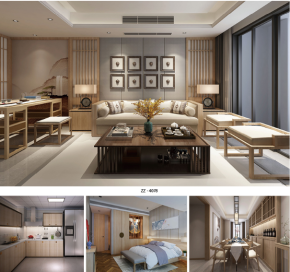
However, in modern times, Solid wood furniture It is once again steadily reclaiming its position as a mainstream furniture category, with solid‑wood flooring, solid‑wood staircases, and solid‑wood furniture all flourishing in the public eye. In particular, the emerging New Chinese‑style solid‑wood furniture, which blends contemporary aesthetic trends, is emerging as a dark horse in today’s furniture market.
Clearly, in the course of future social development, solid‑wood furniture will not only remain on the stage of history but is also likely to evolve its own distinct trajectory, shaped by the defining characteristics of each era.