
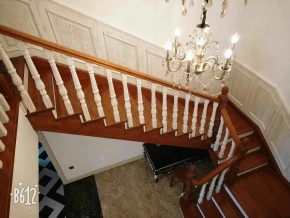
1. When wooden stairs get damp, their wooden components are prone to warping and cracking, and the paint may peel off. Stainless steel stairs also incorporate wooden parts; moreover, stainless steel can rust when exposed to moisture. Therefore, for everyday cleaning, avoid using large amounts of water—simply spray a mild cleaner onto the surface and wipe it down with a soft cloth.
II. Components that are frequently touched, such as stair treads and handrails, tend to have a shorter service life than other structural elements; therefore, they should be periodically treated with a specialized wax or floor wax for protection. In addition, although some stair treads are finished with a UV‑cured, wear‑resistant coating, nevertheless… “Wear resistance” is relative; even wood itself has a finite service life. To prevent severe localized wear on wooden treads over time, you can lay a strip of carpet across the central tread of the staircase. Of course, the color and shade are up to the homeowner’s preference—consulting a designer is also an option. This not only helps protect the staircase but can also subtly enhance the overall space.
3. Prevent insect damage. When installing the staircase, you can sprinkle an insect repellent on the concrete treads in advance; additionally, keep the staircase dry and avoid exposure to moisture.
4. Regularly inspect all component joints to prevent loosening or insect damage. Although engineers secure the staircase components tightly during installation, continuous fluctuations in temperature and humidity cause subtle physical changes in each part. Wooden staircases, especially those incorporating metal or other materials, are often susceptible to sagging, wear, or infestation by wood‑boring insects—issues that can be repaired by qualified professionals. However, proactive maintenance is even more critical; proper care can significantly extend the staircase’s service life.