
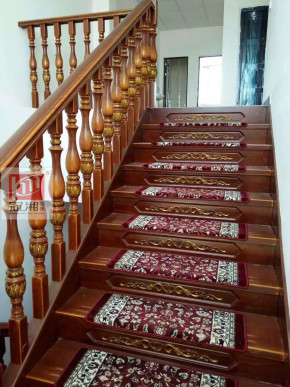
As environmental awareness grows and the economy rapidly develops, people’s expectations for quality of life are steadily rising. More and more individuals are seeking healthy, eco‑friendly, stylish home interiors and a high‑quality lifestyle. The distinctive qualities of solid‑wood staircases make them an excellent choice for showcasing refined taste in home design. However, substandard installation can compromise the overall living environment, making it essential to pay close attention to the installation process. So, what key considerations should be kept in mind when installing a solid‑wood staircase, and how can you ensure top‑notch installation quality?
1 , Emphasize the painting process
As the saying goes, “Three parts material, seven parts lacquerwork.” This underscores that, for wooden products, both the overall form and the finished appearance are closely tied to the quality of the surface lacquer. Poor lacquerwork directly compromises the piece’s aesthetic appeal. As for solid‑wood staircase installation, the common practice in China is to apply the finish on site after assembly—yet this approach is far from ideal. Site conditions rarely meet the standards of a dedicated paint booth, inevitably affecting the staircase’s overall shape and alignment. When choosing to have a solid‑wood staircase installed, homeowners should keep this in mind.
2 , Selection of Tread Plates
Stair treads are a critical component of any staircase; every day, the weight of foot traffic is borne by them. Therefore, selecting the right material for wooden stair treads is essential. We recommend solid wood finger-jointed boards or solid wood multilayer composite panels, as these types of treads—crafted with finger joints—are less prone to warping or cracking and offer long-lasting durability.
3 , Pay attention to the spacing of the railings.
To ensure the safety and reliability of the staircase, installing handrails is essential; however, the spacing between the two railings must also be carefully considered, as excessive distance can pose a safety hazard. All Potential hazards exist, so the spacing of railings is limited to 12.5 About a few centimeters, to prevent accidental injury to children.